
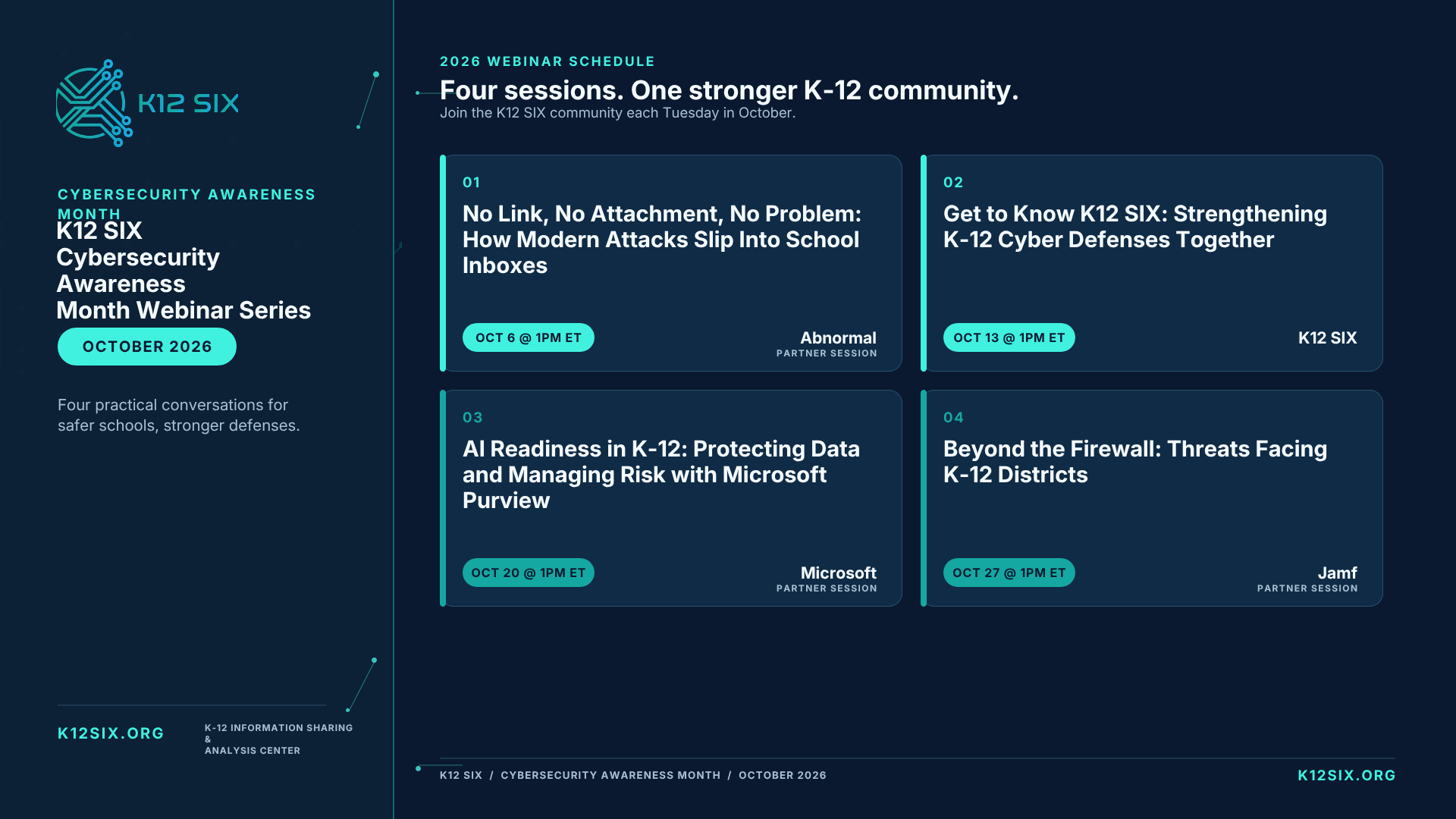
K12 SIX Launches Expert Webinar Series for 2026 Cybersecurity Awareness Month
This October for Cybersecurity Awareness Month, the K12 Security Information eXchange (K12 SIX) is hosting a weekly webinar series to help school systems stay ahead of evolving cyber threats. Featuring industry leaders and active K-12 IT practitioners, each session delivers practical strategies and essential guidance tailored for school administrators and technology teams. Join us to equip your district with the tools and insights needed to foster a secure, resilient digital learning environment.
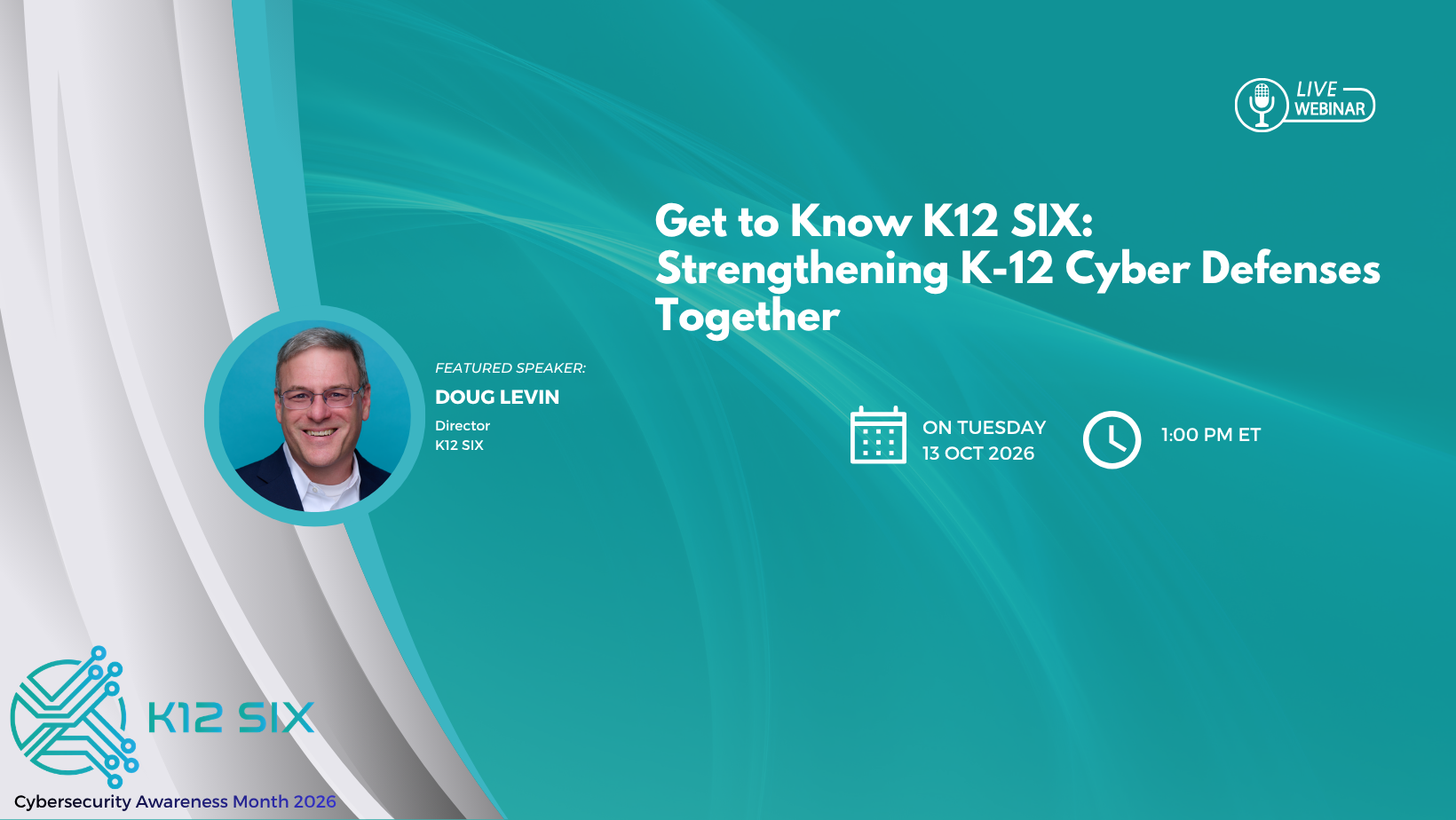
Get to Know K12 SIX: Strengthening K-12 Cyber Defenses Together
October 13th, 2026, at 1:00 PM ET
K-12 networks face a constant barrage of threats—phishing, malware, spam, and other attacks that exploit the open, high-traffic nature of school environments. This session breaks down the most common network-side risks districts encounter today and what makes K-12 IT teams uniquely vulnerable.
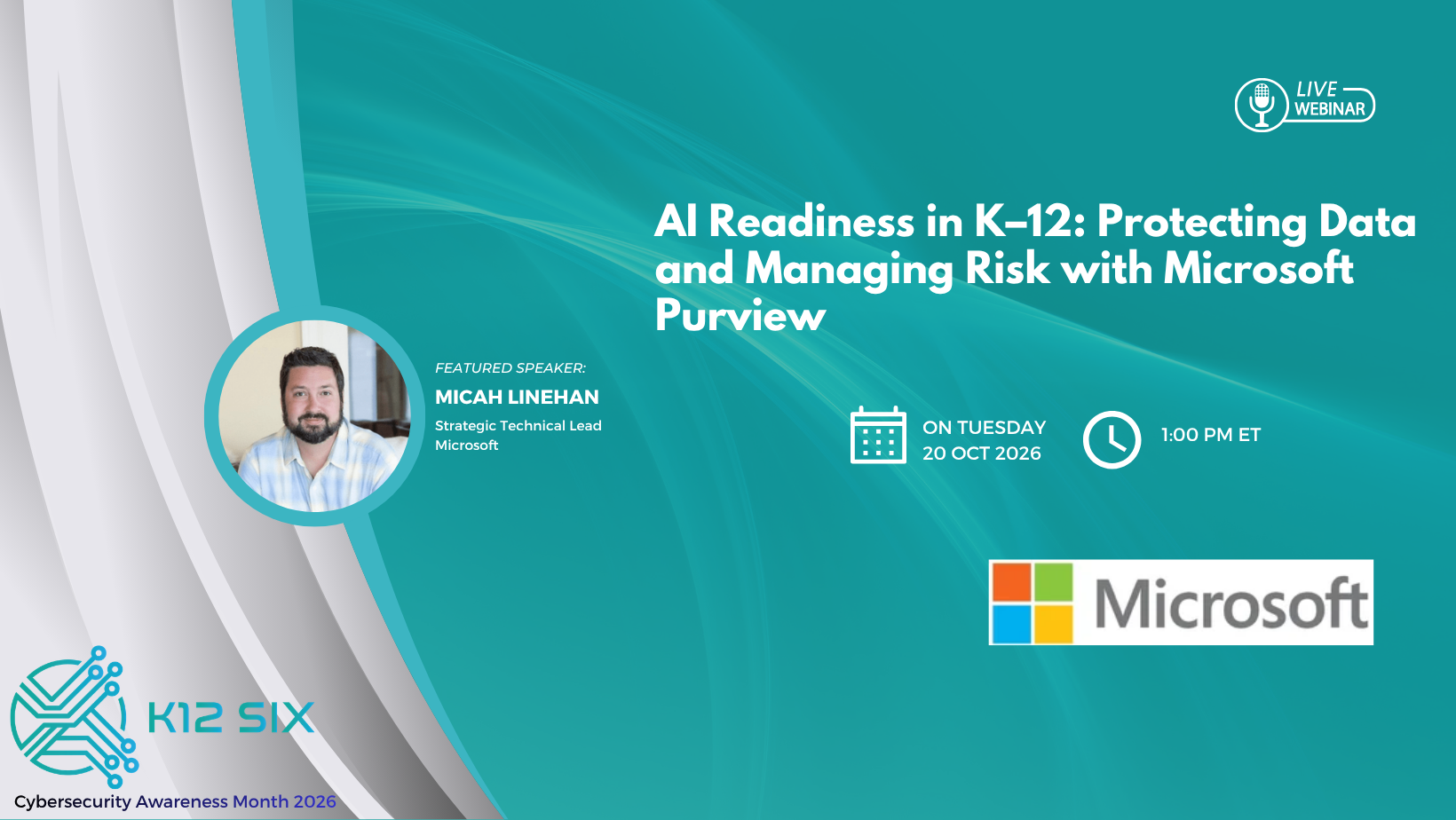
AI Readiness in K–12: Protecting Data and Managing Risk with Microsoft Purview
October 20th, 2026, at 1:00 PM ET | Sponsored by Microsoft
This session will explore practical considerations for AI readiness, including FERPA, data governance, privacy, and security. Attendees will also learn how capabilities within Microsoft Purview can help districts better understand and protect sensitive information, manage data risk, and establish a stronger foundation for responsible AI adoption.
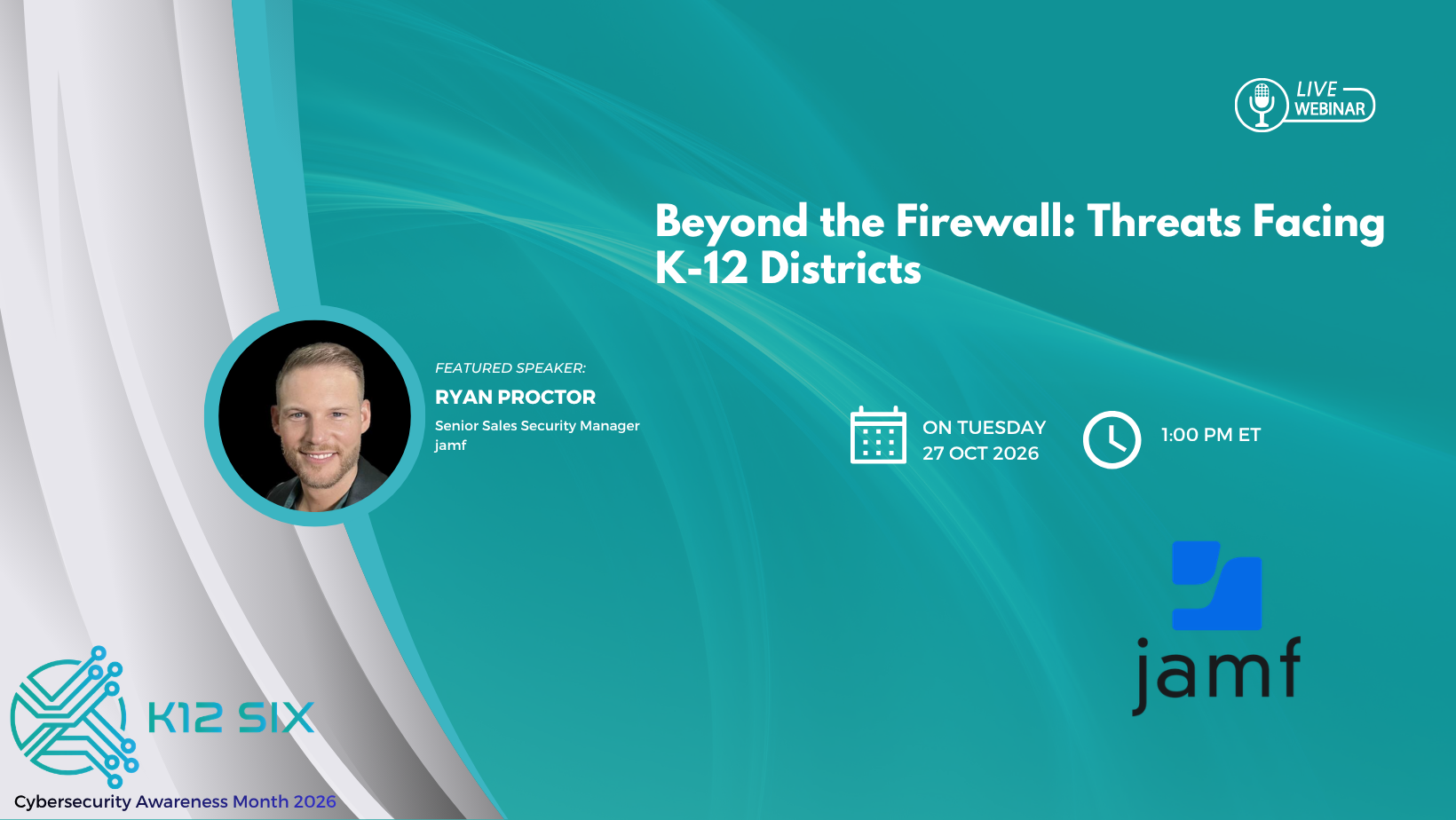
Beyond the Firewall: Threats Facing K-12 Districts
October 27th, 2026, at 1:00 PM ET | Sponsored by Jamf
K-12 networks face a constant barrage of threats—phishing, malware, spam, and other attacks that exploit the open, high-traffic nature of school environments. This session breaks down the most common network-side risks districts encounter today and what makes K-12 IT teams uniquely vulnerable.
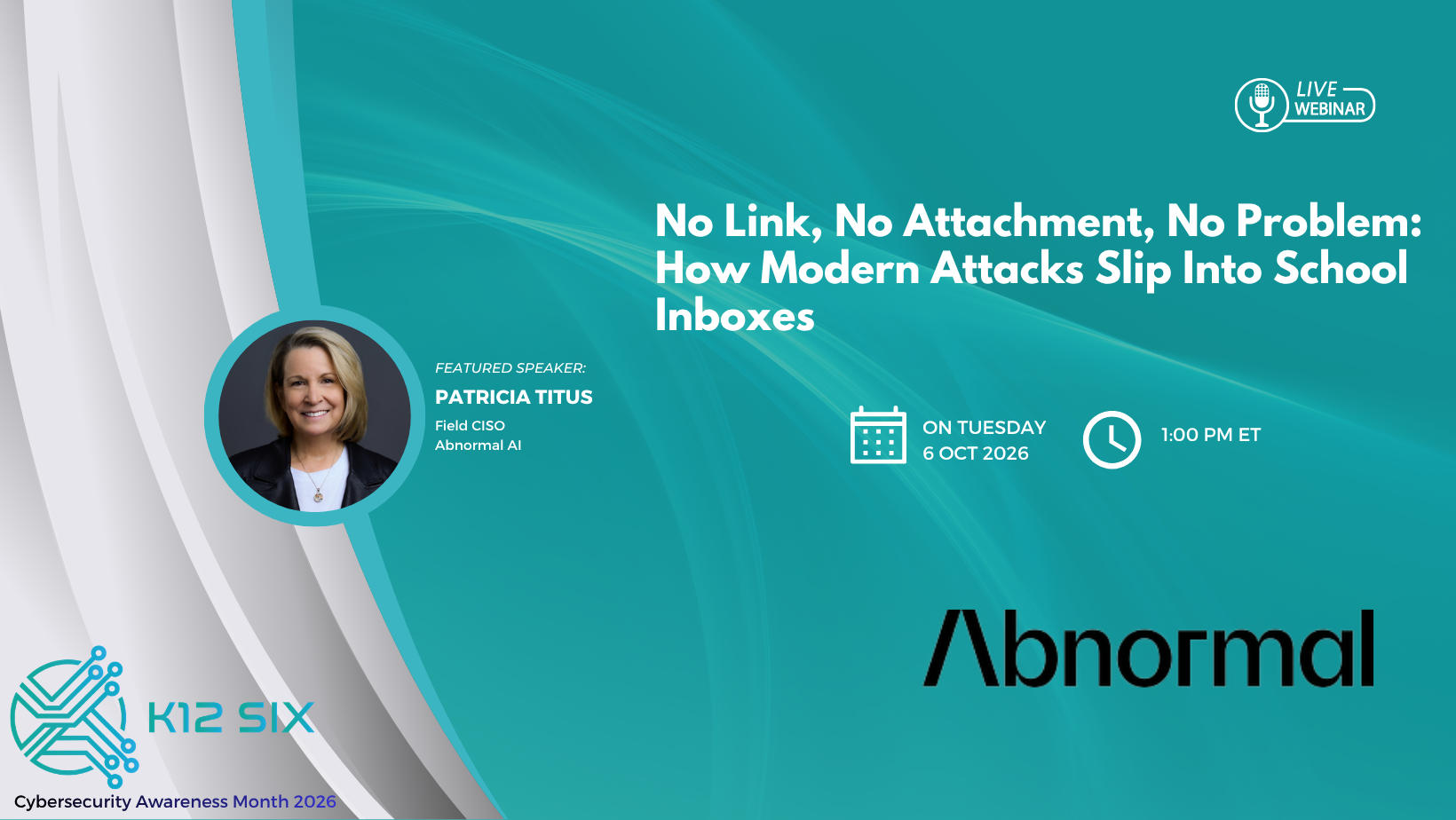
Archived: No Link, No Attachment, No Problem: How Modern Attacks Slip into School Inboxes
October 6th, 2026, at 1:00 PM ET | Sponsored by Abnormal AI
This session walks through the attacks K-12 schools are actually seeing, using real examples of business email compromise, account takeover, and payroll fraud. Abnormal AI will break down how each attack works in plain terms, why traditional defenses miss it, and what school leaders can do about it right now. You'll leave with concrete steps you can put in place before the next attempt lands.